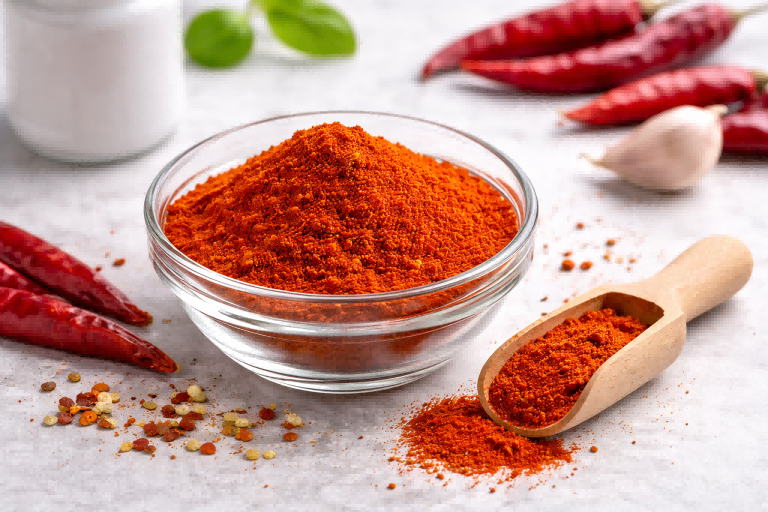
Chili powder roasting process is one of the most influential steps in chili powder manufacturing when the goal is a strong, clean, and repeatable aroma. For B2B buyers, “aroma” is not a vague preference—it’s a performance metric. It affects consumer acceptance, recipe stability, and brand consistency across batches and markets. Two chili powders with similar heat and color can still smell completely different, and the difference is often decided by controlled roasting (or frying/thermal treatment) before or during milling and blending.
1) Why Roasting Matters for Chili Powder Aroma
Chili aroma is partly “in the pepper,” but much of the aroma customers notice is built by thermal processing. In practical terms, roasting influences aroma through three mechanisms:
For procurement, this matters because aroma is the fastest way for end customers to judge quality. A chili powder that looks red and tests at the correct heat level can still fail if aroma drifts between batches or turns harsh after heating in cooking. In many applications (snack coatings, BBQ rubs, sauces, hot pot bases), aroma performance under heat is the real differentiator.
2) Process Principle: Heat + Time + Moisture
The chili powder roasting process is often described as “temperature and time,” but that’s only half the story. Moisture is the silent driver of uniformity and defect risk. At a high level, roasting is controlled heat transfer that removes water and triggers flavor-forming reactions. The four most important variables are:
- Roasting temperature: higher temperature accelerates reactions but increases scorching and volatile loss risk.
- Roasting time: longer time deepens roast notes but can flatten top notes and darken color.
- Moisture level (before and during roasting): moisture controls heat absorption and browning uniformity; uneven moisture leads to uneven roast.
- Oxygen exposure: oxygen promotes oxidation, which can reduce aroma brightness and shelf stability.
Procurement takeaway: when a supplier says “we roast at X°C for Y minutes,” it’s worth asking, “What is the moisture target before roasting, and how do you verify it?” Moisture control is often what separates stable, repeatable aroma from “it depends on the day.”
3) Aroma Chemistry: Where “Roasted Notes” Come From
To keep this buyer-friendly, you don’t need a full lab to understand the principle. The roasted aroma you smell in chili powder comes from a combination of:
3.1 Maillard reaction (savory, roasted, warm notes)
The Maillard reaction happens when amino acids react with reducing sugars under heat. It generates complex aromas often described as roasted, nutty, savory, and “rounded.” This is a foundational mechanism across many cooked foods and explains why controlled roasting can increase depth without needing additives. For a straightforward overview, see this external reference: Encyclopaedia Britannica on the Maillard reaction.
3.2 Caramelization and sugar-driven browning (sweet-toasted notes)
Sugars can also brown and contribute sweet-toasted tones. In chili powder, these notes can support profiles for BBQ, marinades, and snack seasonings. However, when uncontrolled, browning can turn into bitterness and burnt notes.
3.3 Volatile aroma compounds (top notes and identity)
Chilies naturally contain volatile compounds that contribute peppery, fruity, and vegetal aromas. Roasting can reduce some top notes through evaporation while creating new thermal volatiles. The best chili powder roasting process is a balance: enough thermal development to build body and warmth, without destroying the chili’s identity.
4) Key Controls That Decide Aroma Quality
Below is the most buyer-relevant section: the controls that typically decide whether roasted chili powder smells clean and premium—or harsh and inconsistent.
| Control | What It Changes | Typical Aroma Outcome | Common Risk |
|---|---|---|---|
| Temperature | Reaction speed, surface scorching risk | Higher roast depth, stronger warm notes | Burnt/smoky harshness at hotspots |
| Time | Degree of roast, top-note retention | More rounded aroma, less raw sharpness | Flat aroma if overextended |
| Moisture control | Uniformity of heat transfer | Even roast, stable aroma | Patchy roast: some burnt, some underdeveloped |
| Mixing/turnover | Exposure to heat across the batch | Consistent roast character | Localized scorching, uneven color |
| Oxygen & cooling | Oxidation rate after roasting | Better shelf aroma stability | Stale/cardboard note over time |
| Raw material prep | Surface area, seed/stem ratio, size | Predictable roast kinetics | Unexpected bitterness or harshness |
5) Common Roasting/Frying Approaches in Chili Processing
Suppliers may use different roasting systems. You don’t need to prefer a specific machine—what matters is whether the process is controlled and repeatable. Common approaches include:
5.1 Dry roasting (drum or continuous roaster)
Dry roasting uses heated surfaces or hot air with controlled turnover. It can produce clean toasted notes and offers good consistency when mixing and temperature distribution are well-designed. Poor design leads to hotspots and scorching.
5.2 Frying/thermal treatment with controlled oil contact
Some processes use an oil-contact step to transfer heat efficiently and build a richer roasted aroma. This can be beneficial for certain profiles, but it requires strict temperature control, oil management, and quick cooling to avoid greasy or burnt off-notes.
5.3 Staged processing (pre-dry → gentle roast → finish)
A staged approach is often used to improve uniformity by reducing moisture variation before higher heat is applied. This can help protect aroma top notes while still building the warm roasted body expected in many culinary applications.
If you want the full end-to-end context (raw selection, cleaning, drying, roasting, milling, blending, QC), you can review our internal resource: Chili Powder Manufacturing Process. For buyer-side supplier evaluation beyond processing (documentation, stability, consistency, and commercial factors), this guide is also helpful: Chili Powder Supplier Industry Guide.
6) Typical Aroma Defects and Their Root Causes
Aroma defects are costly because they often appear after a launch, not during the first sample evaluation. Here are common defects linked to roasting, with practical root causes:
- Burnt / smoky harshness: temperature too high, hotspot issues, inadequate mixing, over-contact with heated surfaces.
- Flat or “empty” aroma: roast time too long, excessive airflow stripping volatiles, or raw material already aged/oxidized.
- Raw/grassy sharpness: insufficient roast development, moisture too high, or roast too gentle for target profile.
- Bitter edge: localized scorching, high seed/stem ratio, over-roast, or excessive browning beyond the target point.
- Stale/cardboard note after storage: oxidation due to packaging mismatch, prolonged exposure during cooling, or poor oxygen barrier.
7) Buyer-Friendly QA: How to Evaluate Roasted Chili Powder
You don’t need advanced instruments to run an effective screening routine. Use a repeatable evaluation method across suppliers and batches:
7.1 Dry aroma check (quick screening)
Smell the powder in a neutral environment. Screen for obvious issues: musty, chemical, overly smoky, or stale notes. This step is fast but incomplete, since many defects show under heat.
7.2 Heat activation test (most predictive)
Warm a small amount of chili powder gently in a neutral oil or hot broth for 20–40 seconds. Avoid burning. This reveals how aroma behaves in real cooking and helps detect harsh roasted notes or bitterness.
7.3 Application test (your actual product)
Test in your real formula: sauce base, seasoning blend, snack coating, or soup base. Some matrices amplify bitterness; others mute top notes. Your application is the real judge.
7.4 Short-term stability check
Re-check aroma after storage (1–2 weeks). If aroma collapses quickly, it may indicate oxidation sensitivity or an overly aggressive roast that created unstable notes.
8) How to Write a Procurement Spec for Aroma Consistency
Many buyers write specs around color, heat (SHU), and mesh size, then assume aroma will follow. Aroma needs its own control language. Here’s a practical way to define an aroma-centered spec without overcomplicating it:
- Aroma target definition: reference sample + short description (e.g., “clean pepper top note + medium roasted warmth, no smoke”).
- Defect exclusions: “no burnt/smoky harshness,” “no musty/stale notes,” “no chemical off-notes.”
- Process stability indicators: moisture limit, acceptable color range, and a requirement for consistent roast character.
- Evaluation protocol: require heat activation test outcome aligned to the reference sample.
- Packaging requirement: oxygen-barrier packaging appropriate for preserving volatile aroma compounds.
Even a simple aroma spec like the above reduces risk dramatically—especially for chain supply or export distribution, where a single off batch can affect multiple customers or markets.
9) Supplier Questions That Prevent Costly Rollout Issues
When you shortlist suppliers, use questions that reveal process control (not just sales answers). Here are high-impact questions for roasted chili powder sourcing:
- How do you define roast level? (Reference sample, process limits, sensory panel, or internal scoring.)
- How do you control roasting temperature distribution? (Hotspot prevention, mixing/turnover method.)
- What is the moisture target before roasting and after roasting? (And how is it verified per batch?)
- What is your approach to batch consistency? (Seasonal raw material variation plan and blending strategy.)
- How do you protect aroma after roasting? (Cooling steps, oxygen exposure reduction, packaging.)
- What documentation do you provide? (Batch COA, traceability, quality checks relevant to your market.)
10) Next Step: Align Aroma With Your Application
The best chili powder roasting process is application-driven. Snack seasonings may benefit from deeper roasted notes; sauces often need a clean pepper top note; hot pot bases require aroma that stays stable under continuous boiling; ready meals may need balanced roasted warmth without harshness after reheating. In short, the “best” roast is the one that performs consistently in your product’s real thermal and storage conditions.
Need consistent roasted chili powder aroma for manufacturing?
If you are sourcing chili powder for seasoning blends, sauces, snack coatings, or food manufacturing, we can support you with stable specifications aligned to your application. Share your target heat level, color preference, mesh size, and intended use, and we can recommend suitable options and provide samples for evaluation.
Practical tip: compare samples using both dry aroma and heat activation tests. Heat-released aroma is a stronger predictor of real-world performance.