 By Lvyin Food | Explore the most beloved hot pot traditions around the world, their unique soup bases, and why Guizhou’s Sour Soup Hot Pot is redefining modern comfort food.
Why Hot Pot Is a Global Culinary Phenomenon
Hot pot is more than just a meal — it’s an experience. Across continents, people gather around a bubbling pot to share warmth, flavor, and togetherness. From the fiery chili broth of Chongqing to the delicate dashi of Japan, each region has crafted its own interpretation of this communal dish. At Lvyin Food, we take pride in bringing the vibrant, tangy soul of Guizhou’s Sour Soup Hot Pot to the world.
1. Guizhou Sour Soup Hot Pot — The Tangy Treasure of Southwest China
Origin: Guizhou Province, China
Signature Flavors: Sour, spicy, refreshing, umami-rich
Main Ingredients: Grass carp, fermented rice broth, tomato, chili, and bamboo shoots.
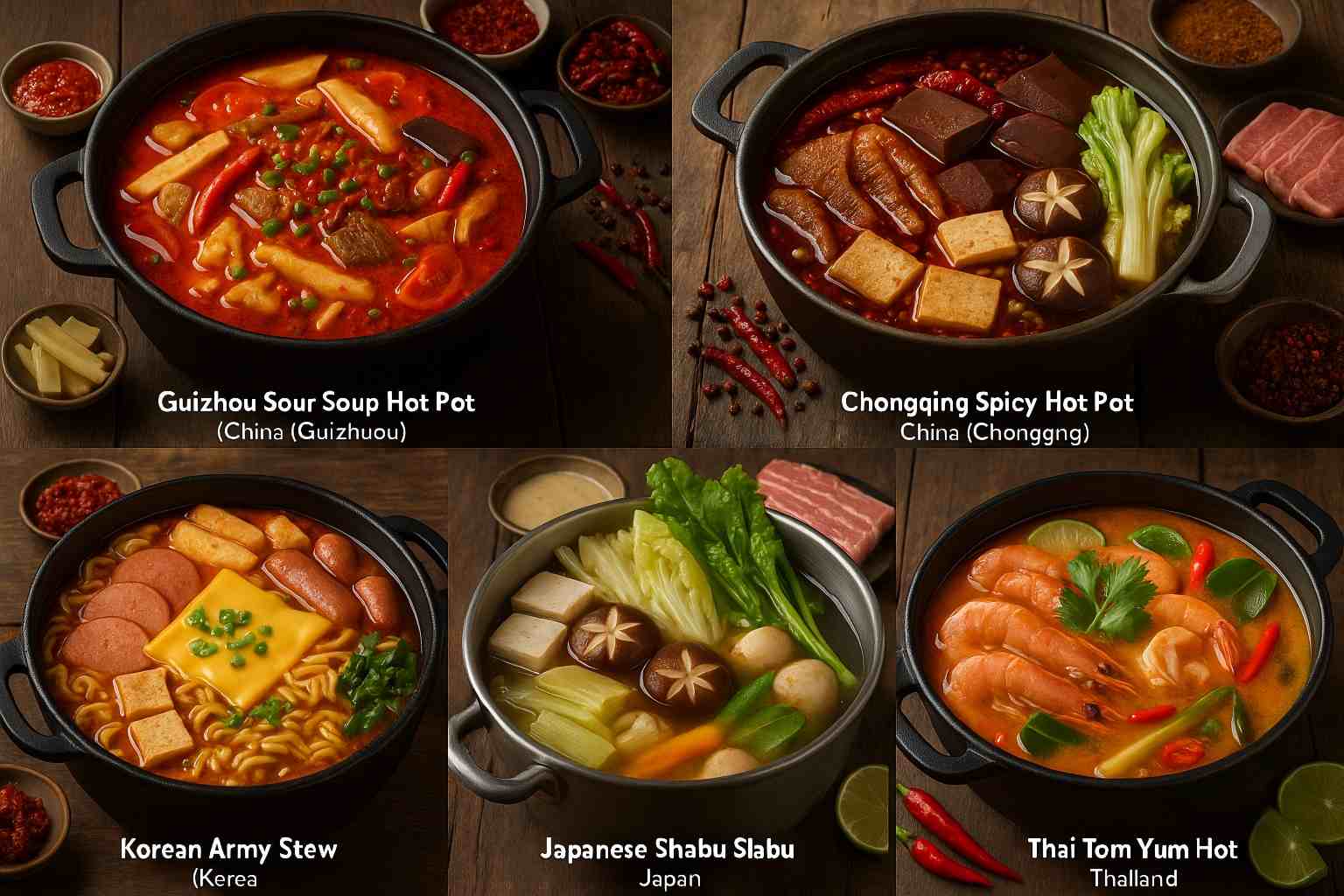
The Guizhou Sour Soup Hot Pot (Suantang Huoguo) stands apart for its vibrant, tangy broth made from fermented rice water and tomatoes. This bright red soup is both invigorating and deeply satisfying — a true reflection of Guizhou’s mountainous terroir and fermentation culture. Unlike oily spicy broths, this one is light, fragrant, and refreshingly sour, stimulating appetite while remaining healthy.
At Lvyin Food, we specialize in authentic Guizhou Sour Soup bases made with traditional fermentation techniques. Our version brings out the perfect balance of acidity and umami, offering an all-natural and gut-friendly dining experience that’s gaining global appeal. In an era when health-driven flavors are trending, this tangy hot pot fits perfectly between tradition and wellness.
What Makes It Special?
- Fermented freshness: Crafted from naturally fermented rice broth for gut health and depth of flavor.
- Clean yet flavorful: Less oily than spicy hot pots but equally rich in aroma.
- Versatile pairing: Perfect with fish, tofu, vegetables, or beef slices.
- Modern appeal: Increasingly popular in Southeast Asia, Europe, and North America.
“Guizhou’s Sour Soup Hot Pot represents the next global trend — where bold flavor meets mindful eating.”
2. Chongqing Spicy Hot Pot — The Fiery King of China
Origin: Chongqing, China
Signature Flavors: Bold, spicy, numbing (mala)
Main Ingredients: Beef tripe, duck blood, tofu, chili oil, Sichuan peppercorns.
Known as the “King of Hot Pot,” Chongqing Hot Pot embodies the intensity and passion of Chinese cuisine. Its hallmark is the deep red broth simmering with beef tallow, chili, and peppercorns that deliver the addictive mala sensation — spicy and numbing in perfect harmony. It’s not just food; it’s an attitude.
Chongqing Hot Pot’s success has spread across the globe, inspiring countless restaurants from Los Angeles to London. While it’s famous for its spice, the magic lies in the complexity of the aromatics — a dozen spices layered to perfection.
Why People Love It
- Bold, stimulating flavors that awaken every taste bud.
- Communal and theatrical — perfect for gatherings.
- Customizable spice levels and diverse dipping sauces.
3. Japanese Shabu Shabu — The Art of Simplicity
Origin: Japan
Signature Flavors: Clean, umami, light
Main Ingredients: Thinly sliced Wagyu beef, tofu, vegetables, mushrooms.
Shabu Shabu takes the minimalist philosophy of Japanese cuisine to the hot pot table. The name mimics the sound of swishing meat in the hot broth — “shabu-shabu.” Diners cook each slice for just a few seconds, ensuring tender, perfectly cooked bites.
The clear kombu broth highlights the pure taste of ingredients, while the dipping sauces — ponzu (citrus soy) and sesame — add depth. This hot pot focuses on precision, balance, and respect for natural flavor.
Why It Stands Out
- Emphasizes quality ingredients over heavy seasoning.
- Delicate, health-oriented, and elegant.
- Represents harmony and mindfulness in dining.
4. Korean Army Stew (Budae Jjigae) — A Fusion of History and Comfort
Origin: Korea (post-Korean War era)
Signature Flavors: Spicy, savory, cheesy
Main Ingredients: Kimchi, spam, sausages, instant noodles, tofu, and cheese.
Budae Jjigae, or “Army Stew,” is a creative and comforting fusion born from resourcefulness. After the Korean War, people combined U.S. military surplus foods like sausages and canned ham with traditional Korean spices and kimchi — creating an unexpectedly delicious cultural hybrid.
Today, it’s a nostalgic favorite across Korea and beyond. The stew’s richness, color, and variety make it a fun, indulgent experience that bridges generations. The addition of ramen noodles and melted cheese gives it an irresistible twist.
Why It Captures Hearts
- Combines East and West into a single hearty bowl.
- Colorful, social, and easy to share.
- Comfort food that evokes nostalgia and unity.
5. Thai Tom Yum Hot Pot — A Symphony of Herbs and Spice
Origin: Thailand
Signature Flavors: Sour, spicy, aromatic, balanced
Main Ingredients: Shrimp, lemongrass, galangal, kaffir lime leaves, mushrooms, chili, lime juice.
Tom Yum Hot Pot delivers a bold explosion of tropical flavors. The broth — infused with lemongrass, galangal, and lime — strikes a precise harmony of sourness, spice, and aroma. Unlike most creamy soups, Tom Yum feels vibrant, refreshing, and alive with herbal energy.
It’s not only Thailand’s national soup but also a global favorite for those seeking complexity without heaviness. Whether enjoyed with seafood, tofu, or noodles, each spoonful carries a refreshing spark that awakens the senses.
What Makes It Unforgettable
- Signature Thai balance of five tastes — sour, spicy, salty, sweet, and umami.
- Made with real herbs, not artificial flavors.
- Widely loved in wellness cuisine circles worldwide.
Global Hot Pot Comparison at a Glance
| Hot Pot Type | Region | Flavor Profile | Main Ingredients | Signature Element |
|---|---|---|---|---|
| Guizhou Sour Soup Hot Pot | China (Guizhou) | Sour, spicy, refreshing | Fish, tomato, fermented broth | Fermentation & balance |
| Chongqing Spicy Hot Pot | China (Chongqing) | Spicy, numbing, oily | Beef tripe, chili oil | Mala aroma |
| Japanese Shabu Shabu | Japan | Light, clean, umami | Wagyu, kombu broth | Minimalist precision |
| Korean Army Stew | Korea | Spicy, cheesy, savory | Spam, noodles, kimchi | Fusion comfort |
| Thai Tom Yum Hot Pot | Thailand | Sour, spicy, herbal | Shrimp, lemongrass, chili | Herbal brightness |
Final Thoughts — One Pot, Endless Stories
From the tangy red broth of Guizhou to the herbal heat of Thailand, these five hot pots tell the story of how comfort, culture, and community can be shared through a single pot of soup. Each version reflects its homeland — spicy and social in Chongqing, refined and minimalist in Japan, bold and inventive in Korea, fragrant and tropical in Thailand.
At the heart of it all lies Guizhou’s Sour Soup Hot Pot — a shining example of how traditional fermentation and modern health consciousness can blend beautifully. As Lvyin Food continues to bring this regional delicacy to global kitchens, one thing remains certain: the world is ready for the next flavor revolution — and it starts with a bowl of sour soup.